Author: admin

  • Services de consommation supervisée et soutien communautaire

    Services de consommation supervisée et soutien communautaire

    Les centres d’injection supervisée aident à sauver des vies et à protéger les communautés. Telle fut la conclusion de plus de 30 études de recherche sur le centre d’injection supervisée (CIS) de Vancouver, Insite. Et la Cour suprême du Canada a exprimé son accord en septembre 2011, et ordonné à la ministre fédérale de la Santé d’accorder une exemption en vertu de l’article 56 de laLoi réglementant certaines drogues et autres substances pour permettre à Insite de poursuivre ses activités.

    Pour accroître la réduction des méfaits et soutenir le développement de services semblables dans toute la province, le ministère de la Santé de la C.-B. a révisé son « Guidance Document for Supervised Injection Services ». Rédigé à l’intention des professionnels de la santé, il offre des conseils aux autorités sanitaires et à d’autres organisations qui envisagent d’offrir des services d’injection supervisée dans leur localité.

    Selon la politique provinciale, quiconque désire offrir ce service devra examiner comment il obtiendra le soutien des groupes locaux comme les médecins hygiénistes, les services de police et autres groupes éventuellement concernés. La décision de la Cour suprême du Canada mentionne brièvement les futures applications de l’exemption en vertu de l’article 56 :

    [153] La Loi accorde au ministre le pouvoir discrétionnaire de décider s’il faut accorder ou non une exemption. Ce pouvoir discrétionnaire doit être exercé en conformité avec la Charte. Le ministre doit donc se demander si le refus d’une exemption porterait atteinte aux droits à la vie et à la sécurité des personnes autrement qu’en conformité avec les principes de justice fondamentale. Les facteurs pris en compte pour rendre une décision relativement à une exemption doivent comprendre la preuve, si preuve il y a, concernant l’incidence d’un tel centre sur le taux de criminalité, les conditions locales indiquant qu’un centre d’injection supervisée répond à un besoin, la structure réglementaire en place permettant d’encadrer le centre, les ressources disponibles pour voir à l’entretien du centre et les expressions d’appui ou d’opposition de la communauté.


    Cette dernière phrase a soulevé des questions quant à la probabilité du succès des futurs services de consommation supervisée. Malgré les preuves écrasantes de leur succès, les services de réduction des méfaits font toujours l’objet de controverses publiques, ce qui veut dire que des membres de la communauté vont probablement s’objecter à des services de consommation supervisée. Mais l’existence de cette opposition ne signifie pas nécessairement que les demandeurs éventuels doivent cesser leurs efforts. En fait, le jugement de la Cour suprême n’est pas une liste des critères d’une demande réussie mais plutôt, une description des facteurs que le ministre doit prendre en compte pour décider. Les demandeurs éventuels doivent être en mesure de démontrer qu’ils ont sondé le soutien public et peuvent prouver qu’il existe. Les demandes, comme le suggère le gouvernement provincial de la C.-B., doivent comporter des preuves tant du soutien que de l’opposition.

    Il faut se rappeler qu’Insite n’a pas nécessairement démarré avec le soutien de la communauté au complet. C’est plutôt avec le temps, et avec la continuité des activités du centre que la communauté avoisinante a ressenti ses effets positifs et que les chercheurs ont pu en démonter l’efficacité en ce qui concerne la santé et l’ordre social. Cela ne signifie pas que si un groupe s’objecte, alors la demande sera nécessairement non reçue. Les candidats éventuels à une exemption devront décrire les initiatives qui seront prises pour tenir compte des préoccupations de la communauté, et examiner la façon dont ils entendent éduquer leur communauté au sujet des effets positifs de ces services.


  • Bud Osborn: Drug War Poems & DTES history

    Bud Osborn: Drug War Poems & DTES history

    Bud Osborn’s prose charges drug policy debates with deep revelations and compassion. As a long time poet and social activist living in Vancouver’s Downtown Eastside, Bud is a light for many. His evidence is wrapped in poetry that can only come from first hand experiences. He turns the suffering he sees into poignant words aimed at shattering the paradigm of prohibition.

    At an epicenter of the war on drugs in Canada, the residents of the Downtown Eastside have long known the harms of prohibition. On September 22, 2012 the community gathered under a tent at Oppenheimer park for a day of open dialogue and discussion and food. After the acknowledgment and welcoming to Coast Salish Territory, Bud opened the day with this poem on the drug war and the story of the neighborhood. Please share this video and let his words inspire more discussion and change. Together we can build a future of collective self-determination and social justice.

  • Envy and Love in Portland

    Envy and Love in Portland

    Is it possible for a Canadian interested in issues like scaling-up harm reduction and drug law reform to envy the U.S.? That’s the worrisome question that crossed my mind as I sat in the opening plenary of the 9th National Harm Reduction Conference in Portland, Oregon.

    Two U.S. states recently voted to pass ballot initiatives that would end the prohibition of cannabis use by adults. And in the spirit of dignity, law reform and harm reduction activists have championed a myriad of community-based and public health department-led initiatives to scale-up overdose prevention and response programs. That reality is evident here in Portland, given the number of sessions devoted to this topic. Speakers like Willie Dudley of Casa Segura in Oakland, CA, talked about the empowerment experienced by peers who’ve been trained to respond to overdoses with the opiate agonist Naloxone.

    And then there’s Gil Kerlikowske. He’s the head of the White House’s Office on National Drug Control Policy. Given the recent U.S. election outcome, it looks like he gets to keep his job as Obama’s drug Czar. Typically that office has championed the war on drugs and all its brutality, but Kerlikowske delivered welcoming remarks to the delegates in Portland via video feed. He took pains to note that he was the first person in his position to do so. Likely his appearance at this conference is the result of the hard work of relationship building done by people like Allan Clear, head of the New York-based Harm Reduction Coalition. Kerlikowske reiterated his support for syringe exchange and echoed the commitment made by his office this past summer to support the scale-up of overdose programs including making Naloxone more readily available.

    Of course rhetoric is one thing and reality is another. Behind Kerlikowske’s words is still the reality of the U.S.-led war on drugs, which includes American support for the militarization of the drug war along the Mexico/U.S. border. There’s still a federal ban on funding for syringe distribution re-imposed by a Republican controlled congress in 2010. And there are still thousands of arrests daily for drug possession. One need only to turn briefly to Michelle Alexander’s book, The New Jim Crow, to be astutely reminded that this drug war is a racist one. But then again, these realities are also true in Canada where First Nations people are disproportionately imprisoned, where Canada also supports the militarization of the U.S./Mexico drug war and where harm reduction has been redlined in the National Anti-Drug Strategy.

    Yes it’s true that we have deep political resistance to harm reduction in Canada but nevertheless we must figure how we can work together across the country to scale-up harm reduction services. We can’t keep it secret anymore. The proponents of harm reduction have created a profoundly important practice of health engagement and we have something to teach the rest of the system. So let’s get that conversation going. If you’ve already started, let us know what works best and we will share that wisdom with everyone who will listen.

  • The Drug War in Your Passport

    The Drug War in Your Passport

    On October 18th, 1929, the Judicial Committee of the Privy Council in England, the highest court in Canada at the time, made a landmark decision that would forever change the role of women in Canadian politics. It repealed a previous ruling by the Supreme Court and made official women’s status as “persons” in Canada, which meant that from that point on, women were eligible to become members of the senate.

    The individual largely responsible for this ruling was the trailblazing women’s rights activist Emily Murphy, who three years prior became the British Empire’s first female magistrate. Along with four other women, who came to be known as “the famous five”, Murphy campaigned for this crucial shift in the meaning of the word “person”.

    Murphy’s legacy is alive and well today, with statues and art depicting her campaign located across the country. And now, according to a recent announcement, she will also be appearing in the pages of the new Canadian passports, alongside Terry Fox.

    But Murphy has another, lesser-known legacy. She is, perhaps more than any one individual, responsible for the criminalization of cannabis in Canada and the beginning of this country’s 90-year war on pot.

    From 1920 to 1922, Murphy wrote a series of articles for Maclean’s magazine, which would later be collected in her book “The Black Candle”. These writings, which amounted to an explicitly racist, anti-immigrant diatribe, were aimed at “educating” the Canadian public as to the dangers of drug use and drug trafficking.

    Informed by her experience as a magistrate in Alberta and a tour of Vancouver’s Chinatown, Murphy surmised that drug addiction was “a scourge so dreadful in its effects that it threatens the very foundations of civilization.”

    In “The Black Candle” she argued that substances such as cannabis, opium and cocaine were being trafficked throughout the country as part of a vast conspiracy aimed at corrupting the “purity” of the white race and the destruction of Anglo-Saxon communities.

    Of cannabis users she wrote:

    “The addict loses all sense of moral responsibility. Addicts to this drug, while under its influence, are immune to pain, and could be severely injured without having any realization of their condition. While in this condition they become raving maniacs and are liable to kill or indulge in any form of violence to other persons, using the most savage methods of cruelty without, as said before, any sense of moral responsibility.”

    Capitalizing on the anti-Chinese sentiment in Vancouver at the time, she successfully elevated and expanded upon the moral panic associated with opium to the national level and helped persuade the Canadian government to enact stricter drug laws.

    In 1921, An Act to Amend the Opium and Narcotic Drug Act increased maximum sentences for trafficking and possession from one year to seven years. And in 1923, informed by Murphy’s argument and “evidence”, the Canadian government became the first western country to ban cannabis.

    It is a strange and tragic irony that Murphy, who used a contrived drug scare to attack immigrants, should after all these years appear in Canada’s new passport; a document that is meant to enshrine and protect the rights of all Canadian citizens, new or old.

  • Rapport sur les politiques canadiennes sur les drogues

    Rapport sur les politiques canadiennes sur les drogues

    La CCPD se prépare présentement à rédiger un rapport sur les politiques canadiennes sur les drogues. Prévu pour l’hiver, préalablement à la prochaine réunion de l’Organe international de contrôle des stupéfiants, ce rapport évaluera l’état des cadres des politiques canadiennes sur les drogues, dans une optique de santé publique, d’inclusion sociale et de droits de la personne.

    Au Canada, comme presque partout ailleurs au monde, la réponse la mieux financée aux problèmes associés à l’utilisation de drogues a été d’accroître les initiatives policières, ce qui a entraîné l’incarcération d’un nombre croissant de personnes qui utilisent des drogues.

    Notre évaluation critique des cadres politiques révélera la mesure dans laquelle nos gouvernements se sont engagés à des politiques efficaces qui préviennent et réduisent les méfaits associés à l’alcool, au tabac, et à d’autres drogues, ainsi qu’à la recherche de solutions de rechange à la criminalisation.

    Ce rapport offrira des données de départ aux futurs rapports sur les politiques canadiennes sur les drogues, et constituera la pierre angulaire du travail de plaidoirie de la Coalition. La CCPD sollicite votre aide pour ce projet. Si vous souhaitez partager de l’information sur votre organisme ou votre expérience des politiques sur les drogues au Canada, ou encore si vous désirez plus de détails sur ce projet, veuillez communiquer avec Connie Carter, analyste principale en matière de politiques, à l’adresse de courriel [email protected].

  • L’échange de seringues en prison – une question de droits de la personne

    L’échange de seringues en prison – une question de droits de la personne

    Les gens ne renoncent pas à leurs droits de la personne lorsqu’ils entrent en prison. Ils comptent plutôt sur le système de justice pénale pour les respecter, y compris leur droit à la santé. La santé carcérale est la santé publique.

    Ces énoncés peuvent sembler évidents pour certains, mais le droit à des services de santé adéquats est à la base d’une nouvelle poursuite intentée contre le gouvernement fédéral du Canada. Les programmes d’échange de seringues sont un élément essentiel d’une stratégie globale de prévention de la propagation des maladies infectieuses, mais le service correctionnel fédéral ne permet pas ce service de santé de survie dans les prisons fédérales canadiennes. Pour contester cette politique, le Réseau juridique canadien, Prisoners with HIV/AIDS Support Action Network (PASAN), CATIE, le Réseau canadien autochtone du sida (RCAS) et Steven Simons, un ex-détenu fédéral, ont intenté une poursuite contre le gouvernement du Canada aujourd’hui, au motif de son défaut de protéger la santé des personnes incarcérées par son refus permanent de mettre en œuvre des programmes de seringues et d’aiguilles stériles.

    L’utilisation de drogues en prison est une réalité. Un sondage de 2007 mené par le Service correctionnel du Canada (SCC) a révélé que 17 % des hommes et 14 % des femmes s’étaient injecté des drogues tandis qu’ils étaient en prison. Des prisonniers ne sont pas disposés à prendre part au traitement, le traitement peut ne pas être disponible ou approprié. Malgré le fait que l’utilisation et la possession de drogues sont illégales en prison, et malgré les efforts des systèmes correctionnels pour empêcher les drogues d’entrer en prison, celles-ci demeurent largement disponibles. En fait, aucun système correctionnel dans le monde n’a été capable de maintenir les drogues complètement à l’extérieur des murs. Le partage des seringues est une façon très efficace de partager les maladies transmissibles par le sang. Les personnes incarcérées ont des taux de VIH et d’hépatite C qui sont au moins de 10 et 30 fois plus élevés que ceux de la population dans son ensemble, et une grande partie de ces infections se produit parce que les détenus n’ont pas accès à du matériel d’injection stérile.

    Cette poursuite remet en question la croyance selon laquelle les gens révoquent leurs droits quand ils entrent en prison. En fait, les prisonniers conservent les mêmes droits de la personne dont jouissent les personnes en communauté, sauf ceux qui sont évidemment restreints par l’incarcération. Cela comprend le droit au meilleur état de santé susceptible d’être atteint, un droit enchâssé dans plusieurs Traités et conventions de l’ONU. Ce droit englobe des mesures comme l’échange de seringues qui a fait maintes fois ses preuves comme moyen de prévenir la transmission des maladies.

    Il y a également de bonnes raisons de croire que les services d’échange de seringues en prison sont bénéfiques pour nous tous. Ces services sont offerts dans bien des parties du monde et on a constaté, par des évaluations, qu’ils réduisent le partage de seringues, qu’ils n’entraînent pas une utilisation ou injection accrue de drogues, qu’ils contribuent à réduire les surdoses, qu’ils facilitent les renvois des utilisateurs à des programmes de traitement de la toxicomanie, et qu’ils n’ont pas donné lieu à l’utilisation d’aiguilles ou de seringues comme armes contre le personnel. Lorsque ces services ont été instaurés dans les prisons suisses, les employés étaient réticents au départ, mais parce que l’échange de seringues réduisait la probabilité des blessures par piqûres d’aiguilles, ils se sont rendu compte que la distribution de matériel d’injection stérile était dans leur propre intérêt, et ils se sentaient plus en sécurité qu’avant que la distribution commence.

    La vaste majorité des détenus retournent éventuellement dans la communauté, donc les maladies qui sont acquises en prison ne restent pas nécessairement en prison, ce qui signifie que lorsque nous protégeons la santé des détenus, nous protégeons la santé de chaque membre de la communauté. Les prisonniers font partie de notre vie aussi, ce sont des mères, des pères, des frères, des sœurs, des amis et des êtres chers. Vous ne pensez peut-être pas connaître un prisonnier, mais les chances sont que vous en connaîtrez, et vous vous soucierez de sa santé et de son bien-être.

  • Notre soumission à Santé Canada concernant la MDPV (sels de bain)

    Notre soumission à Santé Canada concernant la MDPV (sels de bain)

    Vous souvenez-vous de la tempête dans un verre d’eau alimentée par les médias qui a eu lieu en juin, cette année? Cette brève mais sensationnelle alerte à la drogue a fait mieux connaître les « drogues légales » comme la MDPV, mais n’a probablement pas fait beaucoup pour protéger la santé des utilisateurs actuels et potentiels, quoique ce groupe soit restreint. La couverture médiatique a poussé le gouvernement fédéral canadien à proposer que la MDPV ou la méthylènedioxypyrovalérone (Oui! Si on peut l’épeler, on peut l’annexer), soit ajoutée à l’annexe I de la Loi réglementant certaines drogues et autres substances, ce qui signifie que les peines les plus dures pour possession et trafic s’appliqueraient.

    Comme à l’habitude, Santé Canada a sollicité une rétroaction à la proposition, et au début de juillet, la CCPD a soumis une réponse. Cette réponse a été l’occasion de peaufiner notre analyse de la facilité avec laquelle les gouvernements réagissent à certaines drogues avec de nouvelles formes de criminalisation plus sévères. Nous avons suggéré que l’interdiction de cette substance aurait des effets nocifs non voulus, et avons recommandé de rechercher des modèles de remplacement pour la réglementation de la MDPV, dans le but de répondre au besoin de protéger la santé des Canadiens contre les effets potentiellement nocifs de l’interdiction. Nous avons également insisté sur les importantes distinctions entre l’interdiction et la réglementation des drogues, et indiqué comment la proposition du fédéral d’interdire la MDPV renonce à la possibilité de réglementer et par le fait même, de réduire les méfaits de cette substance de façon significative.

    Nous avons fait valoir nos préoccupations au sujet des risques sociétaux et pour la santé que pose la MDPV, mais avons suggéré que la proposition d’inscrire cette drogue à l’annexe I de laLRCDAS ne produirait pas le résultat voulu de réduire les dangers de la MDPV, et aurait des conséquences néfastes non voulues pour les personnes qui utilisent cette substance. Nous avons favorisé une discussion plus approfondie des modèles et options disponibles pour réglementer toutes les substances psychoactives, en puisant aux leçons tirées d’autres enjeux politiques de santé publique. Nous avons également souligné que la proposition de Santé Canada d’annexer cette drogue était prématurée étant donné la quantité limitée d’information disponible sur les aspects scientifiques de cette drogue, la portée limitée de son utilisation, et la surenchère médiatique autour de son apparition

    Si vous voulez plus de détails sur cette question, une copie intégrale de notre soumission  se trouve ici (en anglais seulement).

  • Meeting up with the Caravan for Peace, Justice and Dignity

    Meeting up with the Caravan for Peace, Justice and Dignity

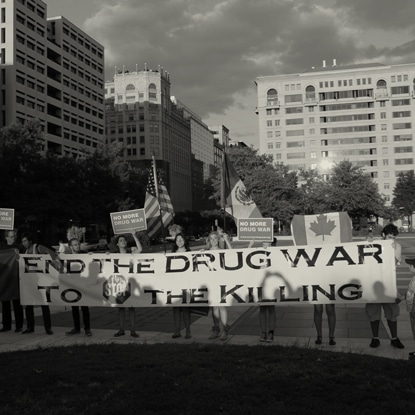
    Gillian Maxwell and CDPC Executive Director Donald MacPherson travelled with the Caravan for Peace from Baltimore to DC where their campaign to bring the realities of the drug war in Mexico to those in the US ended after meetings with US officials on Capitol Hill. The closing ceremony took place in Malcolm X Park where Sicilia gave a poetic and heartfelt speech about hope for the future and building a civil society movement for change through the connections that had been established during the Caravan’s presence in the US. Canadian leadership to end the drug war in Mexico is sorely needed at this time. CDPC will continue to work with our Mexican and American partners towards this end. 

    Having been part of the birthing process of the North American caravan that was inspired by the heartbreak of Javier Sicilia over the death of his son at the hands of a Mexican cartel, it seems only fitting to be joining it at the very end of its journey coast to coast across the United States.

    The Canadians rallied to the call and joined the Caravan in Baltimore for a Town Hall meeting on ending the War on Drugs. I was slated to speak on the panel to talk about the story of INSITE opening in Vancouver’s Downtown Eastside. It is a heroic tale of desperate circumstances, overcoming adversity and being part of a movement that went from local to national and prevailed. I talked about discovering the unique quality inside of us that we all have to offer to our community and how connecting to that is what makes the difference.

    It was the first time I told this story from a personal perspective. I had my doubts but was encouraged by others who reminded me that I have been saying for years that we need to talk about drug policy reform in a more interesting way than statistics. Put your money where your mouth is, so to speak.

    I stood in front of an audience of people who understood suffering only too well. There were the beleaguered African American community members from Baltimore, whose gracious and welcoming demeanour is totally disarming. Yes, they could talk about being stigmatised and persecuted for taking a stand.

    Then, there were the members of the Caravan led by the inspirational being that is Javier Sicilia. He is unwavering in his commitment to keep going and speaks so eloquently of the issues that keep a wealthy and proud country like Mexico caught up in the past.

    And then there were the rest of the Caravan pilgrims; mothers, fathers, sisters, brothers, spouses and children of those who have been disappeared or killed. They are innocents whose lives were totally changed by an experience completely out of their control, and for most, without any hope of resolution or justice. Impunity is the worst betrayal of these gentle souls. Not only were their loved ones in the wrong place at the wrong time, the perpetrators of their murders are allowed to go free. There is no peace for these families and certainly no hope of justice. However, their quiet presence, their insistence in not being silent and asking for accountability is beyond dignified.

    So, I stood in front of this group of people and spoke about the trials and tribulations of a community in the north who were indomitable and dedicated in their creative efforts to stand up for people dying unnecessarily of drug overdoses and HIV/AIDS. I had reservations about my own story, as I hadn’t experienced the violence and tragedy that the caravan had emerged from. But many of the members came up to me and shook my hand afterwards and thanked me for speaking. Then I realised that in that moment we shared our humanity. It is all we have to offer each other and it is enough.

    – Gillian Maxwell

  • The House We All Live In

    The House We All Live In

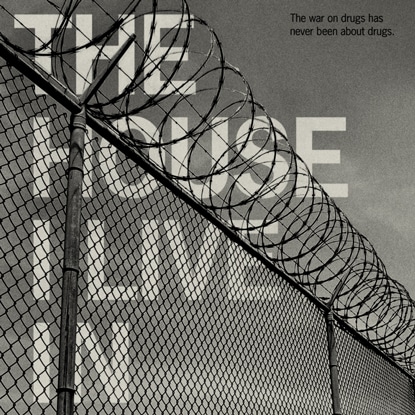
    Winner of the Grand Jury prize for documentary at Sundance, Eugene Jarecki’s “The House I Live In” is a much needed and in-depth analysis of America’s longest war – the war on drugs.

    The facts are blunt: After 40 years, the war on drugs has resulted in 45 million arrests, cost 1 trillion dollars and led the U.S. to amass the largest prison population in the world. These facts alone are disturbing, to say the least, but the raw numbers only provide a one-dimensional picture of what has transpired under the American prohibitionist regime.

    With “The House I Live In”, Jarecki has constructed a compelling history of America’s drug war through the deeply personal stories of those who live it, not just the gangsters or DEA agents, but the drug war’s working class.

    The film strikes a balance between examining the systemic ills that plague and sustain American drug policy and demonstrating, on a deeply personal level, how these policies ensnare individuals, and in turn, those individual’s families and communities.

    Naturally, this is an American story that focuses on class and race issues unique to the U.S. But this doesn’t mean it isn’t relevant to a Canadian audience. Quite the contrary, The House I Live In provides a cautionary tale for Canadians. One of the dominant themes of the film is how destructive and restrictive mandatory minimum sentences for drug offenses are; how they clog prisons with long-term inmates arrested on minor drug charges and hamstring the judiciary in its ability to show discretion.

    When the federal government first proposed to introduce mandatory minimum sentencing in Canada under its “tough-on-crime bill” it received numerous pleas from former and current U.S. law enforcement officials to reconsider and abandon the legislation, as it had proved a catastrophic failure down south.

    A letter delivered earlier this year from members of Law Enforcement Against Prohibition to the Canadian government read:

    “We are … extremely concerned that Canada is implementing mandatory minimum sentencing legislation for minor marijuana-related offences similar to those that have been such costly failures in the United States. These policies have bankrupted state budgets as limited tax dollars pay to imprison non-violent drug offenders at record rates instead of programs that can actually improve community safety.”

    But the government rejected this advice and went ahead with the legislation, leading Canada to replicate the mistakes the U.S. began to make some sixty years ago. Beyond the film’s many merits, this exploration of the side-effects of mandatory minimums will prove especially pertinent to Canadians now that the Safe Streets and Communities Act has been written into law.

    “The House I Live In” is an urgent and vital film, one that seeks to inspire and mobilize its viewers to take action – and it works. This is no small feat, given the sprawling and complex nature of drug war politics. The CDPC is currently working on bringing the film to Canada, so make sure to check back here for information on screenings.